History’s Havens: Explore the Alabama Blackbelt
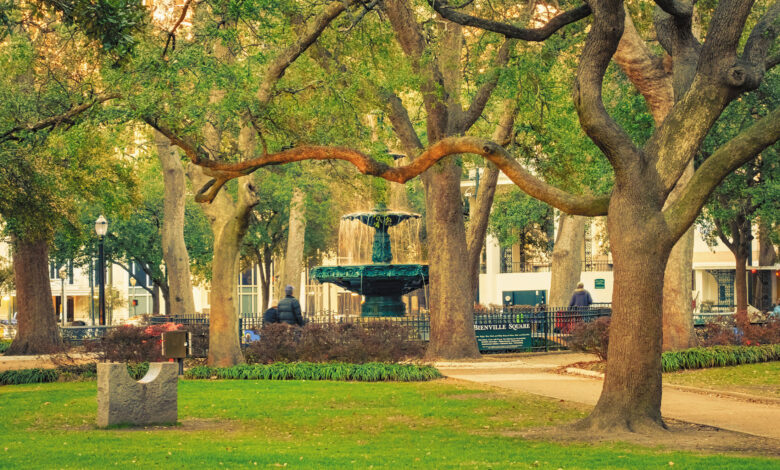
The Alabama Black Belt National Historic District – a belt of 14 counties roughly through the middle of the state – is a region rich in history and natural beauty. The district’s name come from the dark, fertile soil found in this region of the south, which is also historically significant because of its ties to Indigenous cultures, African American history and the Civil Rights Movement. Here is your guide to the U.S.’s newest historic district.
Indigenous Cultures
Moundville Archaeological Site is a national landmark that contains more than 30 platform mounds – the largest rising more than 17 meters – built by the region’s Indigenous Mississippian people. You can learn more about this unique period during a visit to the site, which is located on Black Warrior River south of Tuscaloosa in central Alabama.
Its 326 acres includes several trails, a renovated museum containing artifacts from the site and hosts various events, such as the Moundville Native American Festival held each fall to celebrate Indigenous cultures in the southeastern U.S.
The state is home to one of the densest concentrations on Indigenous sites in the country, and visitors can learn more by following the Alabama Indigenous Mound Trail. Stops in the Black Belt region also include the Mound at Fort Toulouse-Fort Jackson Park and the Mound at Old Cahawba Archaeological Park.
Martin Luther King, Jr.
Montgomery, Alabama, the birthplace of the Civil Rights Movement in the U.S., is where Martin Luther King, Jr. challenged segregation at the Dexter Avenue Baptist Church and where Rosa Parks was arrested after refusing to give up her seat to white bus passengers.
Visitors can tour the 1883-built Dexter Avenue King Memorial Baptist Church, where a bus boycott was organized after Parks was arrested, and the Dexter Parsonage Museum, the one-time home to the Kings.
Other important sites in Montgomery include The Civil Rights Memorial Center, Rosa Parks Museum & Children’s Annex and the Freedom Rides Museum and First Baptist Church. The latter two chronicle how a racially mixed group of college students were savagely beaten by white supremacists at a bus terminal. The students later met with King at the church, which was then surrounded by hostile crowd of 3,000 supremacists.
Civil Rights Movement
The Black Belt also takes in the city of Selma, where three civil rights protest marches between that city and Montgomery were held in 1965.
The Selma Interpretive Center includes exhibits related to the march and is located next to the historic Edmund Pettus Bridge, where voting-rights marchers were attacked by white supremacists.
The Lowndes Interpretive Center is on the National Historic Trail, the route that the marchers took. It includes exhibits about the events that lead to the marches and how it helped the Voting Rights Act of 1965.
African American History
Tuskegee is also part of the historic district. There you can visit the Tuskegee Institute National Historic Site. The institute was founded by Booker T. Washington in 1881 and includes exhibits on the legacy of black scientist George Washington Carver, who researched peanuts and other crops and revolutionized agriculture.
The city is also home to Tuskegee History Center, which was founded by civil rights attorney Fred Gray, who represented both Parks and King. It tells the story of Indigenous, African Americans and Europeans in the area. The Tuskegee Airmen National Historic Site, where African American military pilots were trained during the Second World War, is also in the community.
REGIONAL TRAILS & BYWAYS
Robert Trent Jones Golf Trail
Alabama is the perfect spot to tee-off no matter what time of year you visit. Along with excellent greens designed by some of the best golf course architects in the world, it is also home to impressive resorts featuring stylish accommodations, award-winning spas and delicious restaurants. Best of all, the state is home to the Robert Trent Jones Golf Trail, a collection of 11 popular and reasonably priced golf courses and resorts in Alabama.
On the Greens
Alabama’s Robert Trent Jones Golf Trail – named after the British-American course architect – features 468 holes of championship-caliber golf. Created more than 30 years ago, the trail is known for its value, variety and world-class links, perfect for seasoned golfers and newcomers to the sport.
Among the clubs on the trail are the three-course Capitol Hill in Prattville, which has been named the No. 2 public golf facility in the U.S. by Golf World magazine readers, and the beautiful and challenging Cambrian Ridge in Greenville. Grand National, located in the Auburn and Opelika area, has won countless awards and recognitions for its three courses.
Northern Alabama is home to The Shoals, with its 36-hole Fighting Joe and Schoolmaster courses, and the three-course, 54-hole Hampton Cove that is known for its diverse terrain. In the Birmingham area you will find Oxmoor Valley – carved from the hills and valleys of the Appalachians – and Ross Bridge, a favorite of Golf Digest for years. A short drive to the east in Gadsden is the four-course Silver Lakes.
In the southeastern corner of the state is Highland Oaks, a 36-hole complex featuring some of the longest classically designed holes on the trail, while the Mobile region is home to Magnolia Grove and The Lakewood Club. The combination of Highlands and Magnolia was named by Golf Digest as one of the best places to play in the U.S. because of their value, while The Lakewood’s original 18 holes were built in 1947 by famed course architect Perry Maxwell.
Off the Greens
Great golfing is only part of the experience on the Robert Trent Jones Golf Trail. It also features eight luxurious resorts under the Marriott, Renaissance or Autograph Collection banners that are known for their world class accommodations and spa experiences.
Follow-up a round or two on the greens by enjoying a multi-course meal, relaxing with a rejuvenating spa treatment or taking in a world-class musical performance.
In the north Alabama and Birmingham regions are the 199-room Marriott Shoals Hotel & Spa in Florence that feature the state’s only revolving restaurant, a European-style spa and is known for music performances. The area is also home to the Renaissance Birmingham Ross Bridge Golf Resort & Spa, a Four Diamond resort with 259 guest rooms and balconies overlooking one of the longest golf courses in the world.
In central Alabama you will find the Auburn Marriott Opelika Resort & Spa at Grand National, which is home to a three-story spa complex, the recently renovated Montgomery Marriott Prattville Hotel & Conference Center at Capitol Hill and the Renaissance Montgomery Hotel & Spa at The Convention Center, featuring 345 luxurious accommodations and several restaurants.
Those looking for relaxed luxury in the Mobile Bay region should check out The Battle House Renaissance Mobile Hotel & Spa and the Grand Hotel Golf Resort & Spa. It has been recognized as one of the top five historic hotels in the U.S. ■